Load balancing web servers with Pound

If you’re running a web site and have come to a point where a single web server cannot handle the traffic, then it’s time to get multiple web servers and share the loading. To do that you’ll need a load balancer which distributes the web traffic among multiple web servers.
Basically you’ve two choice — go for the hardware solutions (expensive with many nice features) or software solutions (possibly free but with limited features). If you want a free and open source solution then Pound is the choice.
1. a reverse-proxy: it passes requests from client browsers to one or more back-end servers.
2. a load balancer: it will distribute the requests from the client browsers among several back-end servers, while keeping session information.
3. an SSL wrapper: Pound will decrypt HTTPS requests from client browsers and pass them as plain HTTP to the back-end servers.
4. an HTTP/HTTPS sanitizer: Pound will verify requests for correctness and accept only well-formed ones.
5. a fail over-server: should a back-end server fail, Pound will take note of the fact and stop passing requests to it until it recovers.
6. a request redirector: requests may be distributed among servers according to the requested URL.
Pound is built with security in mind, it can run as setuid/setgid and/or in a chroot jail. It’s a very small, robust and efficient program.
It’s very easy to install and configure.
Installation
pound can be installed from the source or the binary depending on your os distribution.
Configuration
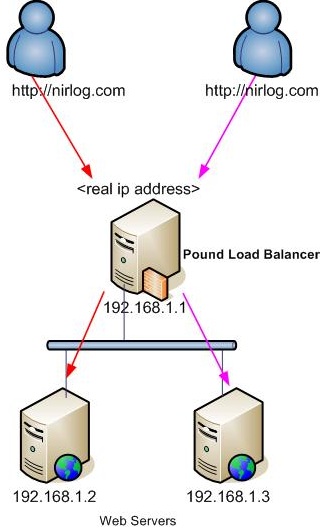
Here’s an example of simple configuration to share the loading between two web servers behind the Pound load balancer
ListenHTTP
Address <real ip address>
Port 80
End
ListenHTTPS
Address <real ip address>
Port 443
Cert “/etc/pound/ssl-cert.pem”
EndService
BackEnd
Address 192.168.1.2
Port 80
End
BackEnd
Address 192.168.1.3
Port 80
End
End
Pound can keep track of sessions between a client and a back-end server by client address, Basic authentication, URL parameter, cookie or header value. Here’s how we keep the session by cookies
Session
Type Cookie
ID “sess”
TTL 300
End
Pound is straight forward to configure and understand. It’s a perfect choice for free and open source load balancer.





Skype has opened its internet-structured consumer beta on the world, soon after launching it generally inside the U.S.
and U.K. previous this 30 days. Skype for Online also now
can handle Linux and Chromebook for immediate messaging communication (no
voice and video but, all those call for a plug-in installing).
The increase of your beta provides help for an extended listing of spoken languages to assist reinforce that worldwide usability